 |
 |
 |
|
 |
 |
 |
 |
 |
 |
 |
In the NewsPrescribed Fire: Managing Smoke and Fire in the Tahoe Basin
date posted: October 20 2003
By John Cobourn, Water Resource Specialist;
Heather Segale, Environmental Education Coordinator; University of Nevada Cooperative Extension; and Rex Norman, USDA Forest Service
This fall, you may see smoke rising in the Lake Tahoe Basin. It is likely to be from “prescribed fires.” The use of prescribed fire has become an essential tool of forest management, and it is highly effective in reducing wildfire risks and enhancing forest health.
Decades of fire suppression build up fuels
To most people, fire in the forest brings images of danger and destruction. Fire, specifically wildfire, can have devastating effects on the watersheds, water quality, habitats and a range of other resources. However, the large and severe fires we have seen recently in the West are partly the result of decades of suppressing nearly all fires. We did not always recognize that fire has an important role in maintaining forest health, diversity, watersheds and habitat. Many decades of suppression contributed to dangerous accumulations of dead woody debris and overgrown stands of trees in poor health. These changes created conditions for producing high-intensity wildfires that can not only be catastrophic for humans, but for wildlife habitat and forests as well. High-intensity fires often burn so hot that they kill most, if not all, of the vegetation in their paths. Conversely, more frequent low-intensity fires, which only burn close to the ground, do not kill healthy trees or even destroy the organic duff layer on the soil, but rather maintain and improve wildlife habitat and species diversity.
What we can do
With the dramatic increase in Sierra Nevada populations and communities, and the build-up of hazardous fuels that has occurred over the past several decades, what can we do to restore forest health and reduce wildfire risks? Like a doctor, a forester can use fire in a prescription for a specific condition. No two applications of prescribed fire are the same, as each is designed to meet the specific conditions and needs of the location, such as vegetation types, slope, and nearby communities. Additionally, prescription burns include pile burns, used to remove excess fuels when physical removal from the area is not possible, due to topography or resources; and broadcast burns, which are low-intensity ground fires used to support the fire-dependent forests.
Before any prescribed fire can be introduced, the area must be carefully prepared. Thinning is used to remove the heavy growths of small-diameter trees. Then, the floor of the forest is cleared of heavy buildup of dead and downed wood. Ladder fuels are also reduced. Ladder fuels are burnable materials that can carry fire on the forest floor up into the trees, such as hanging dry branches that extend from the ground to the crown of a tree. These preparations reduce fire spread and help the fire to mimic the low intensity and slow movement that characterized fires before suppression efforts were common. For example, broadcast burns are often ignited at the top of a slope and allowed to burn slowly downhill.
Protecting air and water quality
Many agencies work together on prescribed fire planning, including the TRPA, the county air pollution control districts, forest and fire management agencies and others. These agencies are sensitive to the impacts of smoke on communities, including sensitive individuals such as children, the elderly and those with respiratory ailments, such as asthma. They also do not want to negatively affect the scenic values so important to Lake Tahoe. Therefore, prescribed fires are only done at certain times, when weather conditions are favorable. Winds that can transport the smoke up and out of the Basin must be present. Only a few days each year meet the weather criteria needed to perform prescription burns.
Fire management agencies have specific protocols for prescribed fire, which are used to develop a “burn plan” for all prescribed burns. These plans must specify how smoke impacts will be kept to a minimum. They also outline specific contingencies in the event that smoke affects communities and describe conditions when it might be necessary to suppress the fire.
Over the long run, prescribed fires can actually reduce negative air quality impacts. Prescription burns and biomass fuel removal help prevent larger, catastrophic fires that could generate much more smoke and burn much longer, depending on weather and the amount of fuel in the forest.
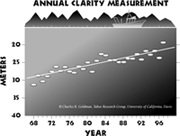
Prescribed burns also help protect Lake Tahoe’s famed clarity. Whereas high-intensity wildfires generate large amounts of smoke that deposit nutrients and particles into the lake, prescribed fires produce less smoke and are conducted at times when the smoke will leave the basin rapidly. Prescribed burns are also designed to prevent erosion, whereas high intensity wildfires often increase the potential for soil erosion.
A prescription for success
Prescribed fires are implemented by highly trained professionals who know the potential risks of managed fire. While most of the public has heard of a prescribed fire somewhere that has escaped, these situations are very rare. Burn plans always consider potential escape, and crews and equipment are standing by for all possible contingencies. While one escaped prescribed fire certainly makes the headlines, the fact is, thousands of successful prescribed fires are conducted in the United States every year, helping to protect lives and our environment.
Watch for “The Lake Tahoe Report” on KOLO-TV News Channel 8 Tuesdays at 5 p.m. to learn more. Next week, we will be visiting the newly restored Commons Beach in Tahoe City. “The Lake Tahoe Report” is a collaborative effort of the Lake Tahoe Environmental Education Coalition, University of Nevada Cooperative Extension, UC Davis and the USDA Forest Service. For more information, contact Heather Segale, University of Nevada Cooperative Extension, (775) 832-4138, or logon to www.lteec.org or www.unce.unr.edu.
More News: Kids Learn to Prevent Water Pollution at Tahoe, Through a number of innovative watershed education programs in the . . . read this news. Take a Glimpse of Tahoe’s Natural History, Geologic time is hard to imagine, with vast stretches of . . . read this news. Local Schoolchildren Ready for Earth Day, In Toni Rockwell’s third-grade class at Rideout Elementary School, excitement . . . read this news. Lake Protection Efforts Seen as Model of Collaboration, When President Clinton came to Lake Tahoe in 1997, he . . . read this news. Tahoe Communities Use Various Recycling Strategies, Thanks to the careful research and creative thinking of Lake . . . read this news. The Forest Service Accomplishes Much with Help from the Lake Tahoe Restoration Act, By John Cobourn, Water Resource Specialist; Heather Segale, Environmental Education Coordinator; University . . . read this news. Managing Vegetation for Wildfire Prevention, By John Cobourn, Water Resource Specialist; Heather Segale, Environmental Education Coordinator; . . . read this news. Good News for Tahoe from Federal and State Governments, By John Cobourn, Water Resource Specialist; Heather Segale, Environmental Education Coordinator; . . . read this news. Where Does Your Drinking Water Come From?, By John Cobourn, Water Resource Specialist; and Heather Segale, Environmental Education . . . read this news. Drinking Water – Another Reason to Protect Lake Tahoe, Lake Tahoe is considered one of the clearest and cleanest . . . read this news. Lake Tahoe is Losing Water Clarity, Lake Tahoe waters have been losing transparency at an average . . . read this news. Ski Area Erosion, By John Cobourn, Water Resource Specialist; Heather Segale, Environmental Education Coordinator; . . . read this news. Tahoe’s Bears Prepare to Hibernate, The Black Bears that inhabit the mountains around Lake Tahoe . . . read this news. What do Watersheds Matter?, By Heather Segale and John Cobourn University of Nevada Cooperative Extension Most . . . read this news. Why Measure Water Clarity in Lake Tahoe?, By John Cobourn, Water Resource Specialist; and Heather Segale, Environmental . . . read this news. Special Report: Lake Tahoe Air Quality, Meteorology and Air Quality in the Lake Tahoe Airshed There are . . . read this news. Meet Greg Crofton, Tribune Environmental Reporter, In February of 2002 Greg Crofton became the environmental reporter . . . read this news. “The National Map” Lake Tahoe Area Pilot Project Underway, The U.S. Geological Survey (USGS) is developing “The National Map” . . . read this news. KOLO-TV and LTEEC Feature Weekly Information on Lake Tahoe Environment, KOLO-TV and LTEEC Feature Weekly Information on Lake Tahoe Environment The . . . read this news. Fifteen Things You Can Do To Make a Difference in Your Watershed, Learn about your watershed. Use EPA's Nonpoint Source Program web pages . . . read this news. State Road Departments Help Protect Water Quality While Keeping Roads Safe, By John Cobourn, Water Resource Specialist; Heather Segale, Environmental Education Coordinator; . . . read this news. What Kinds of Best Management Practices Work Best?, Most Lake Tahoe residents and second-homeowners know that best management . . . read this news. Choose Plants for Your Landscape Wisely, Whether you are putting in a new landscape or refurbishing . . . read this news. To Protect Water Quality, Allow your Landscape to Act Like a Sponge, What we do in our landscapes has a huge impact . . . read this news. Avoid Summer Water Waste, Especially during the summer, when our region receives very little . . . read this news. Yuck - Algae in Lake Tahoe, There are two major types of algae found in Lake . . . read this news. Living With Bears, By Ann Bryant, Executive Director, BEAR League Bears are probably the . . . read this news. Tahoe Clarity Hits 10-Year High, In 2002, Lake Tahoe was the clearest it had been . . . read this news. Lakes Tahoe and Baikal Inspire Unique Russian-American Partnership, Lakes Tahoe and Baikal Inspire Unique Russian-American Partnership The Tahoe-Baikal Institute . . . read this news. Lakes Tahoe and Baikal Inspire Unique Russian-American Partnership, Lakes Tahoe and Baikal Inspire Unique Russian-American Partnership The Tahoe-Baikal Institute . . . read this news. Use Lawn Fertilizers Sparingly at Lake Tahoe, Because landscape fertilizer is one of the most damaging of . . . read this news. What You Can Do To Protect Water Quality, Hike only on existing trails. Use fertilizers and lawn chemicals sparingly. Water . . . read this news. From Under the Water – Part One, Lake Tahoe is naturally an ultra-oligotrophic lake, meaning that it . . . read this news. From Under the Water – Part Two, The future of Lake Tahoe’s water is being shaped by . . . read this news. Wet Weather Construction can be Especially Hard on the Lake, Construction and grading activities such as earth-moving and excavating can . . . read this news. Do We Have Old-growth Forests at Tahoe?, When European-American explorers first viewed the Lake Tahoe Basin in . . . read this news. Prevent Runoff from Polluting Lake Tahoe, The terms “urban storm water” and “polluted runoff” are being . . . read this news. Enjoy the Backcountry – and Take Care of It!, One of the great joys of living in or visiting . . . read this news. Take Steps to Control Air Pollution at Lake Tahoe, Most air pollution is easy to see – it’s that . . . read this news. Where Does Tahoe’s Water Pollution Come From?, Of the six main types of water pollution, Lake Tahoe . . . read this news. Tahoe Clarity Hits 10-Year High, In 2002, Lake Tahoe was the clearest it had been . . . read this news. Good Snow Removal Practices Can Help Prevent Pollution of Lake Tahoe, Since Lake Tahoe’s watershed receives most of its precipitation each . . . read this news. Citizens Get Opportunity to Test Water Quality, Each spring, the Lake Tahoe Environmental Education Coalition (LTEEC) hosts . . . read this news. Conserving Tahoe’s Most Imperiled Plant: Tahoe Yellow Cress, y John Cobourn, Water Resource Specialist; Heather Segale, Environmental Education Coordinator; . . . read this news. Improper Snow Removal Can Be Damaging to Lake Tahoe, By John Cobourn, Water Resource Specialist; Heather Segale, Environmental Education Coordinator; . . . read this news. Blackwood Creek Restoration - A Big Step towards a Better Tahoe, By Rex Norman, USDA Forest Service, Lake Tahoe Basin Management . . . read this news. Lahontan Cutthroat Trout Released, Native to the Tahoe Basin, the Lahontan cutthroat trout is . . . read this news. Tahoe Interagency Information Management System (TIIMS) Under Development, The Tahoe Interagency Information Management System (TIIMS) project will provide . . . read this news. Research Continues to Help Preserve Lake Tahoe, By John Cobourn, Water Resource Specialist; Heather Segale, Environmental Education Coordinator; . . . read this news. Prescribed Fire: Managing Smoke and Fire in the Tahoe Basin, By John Cobourn, Water Resource Specialist; Heather Segale, Environmental Education Coordinator; . . . read this news. Using the Sense of Place as a Catalyst for Learning, By John Cobourn, Water Resource Specialist; Heather Segale, Environmental Education Coordinator; . . . read this news. Tahoe Gets Public Transit Upgrade, By John Cobourn, Water Resource Specialist; Heather Segale, Environmental Education Coordinator; . . . read this news. Forest Stewardship: Learn by Doing, By John Cobourn, Water Resource Specialist; Heather Segale, Environmental Education Coordinator; . . . read this news. Invasive Weeds Threaten Lake Tahoe, Lake Tahoe is frequently featured in news reports lamenting the . . . read this news. Stream and Wetlands Restoration, By John Cobourn, Water Resource Specialist; Heather Segale, Environmental Education Coordinator; . . . read this news. Spotlight on the California Tahoe Conservancy, By John Cobourn, Water Resource Specialist; Heather Segale, Environmental Education Coordinator; . . . read this news. |